You scrolled past it. Someone called their friend their “BSF” and you nodded like you totally knew what that meant. You did not. Let’s find that.
TikTok has its own language. And no, we’re not talking about the regional slang your grandma uses — we mean a full-on evolving glossary of abbreviations that can leave even experienced social media users scratching their heads. BSF is one of those terms that pops up constantly in captions, comments, and video descriptions.
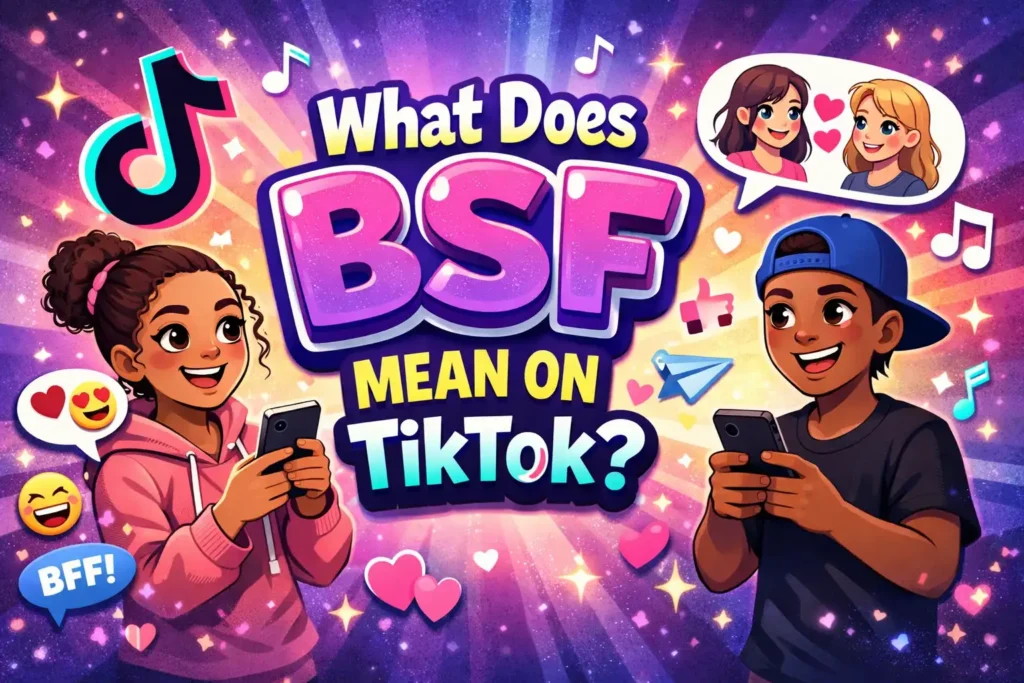
So, what does BSF mean on TikTok? The short answer: Best Friend. The longer answer involves why Gen Z ditched “BFF,” how BSF spread across social media, and what it actually signals when someone calls you their BSF. Stick around — this one’s worth knowing.
BSF on TikTok — The Simple Definition
BSF stands for Best Friend. That’s the primary, most widely used meaning of the term, especially on TikTok, Snapchat, and Instagram. When someone tags a video with “me and my BSF,” they’re pointing at the person they’d call at 2 AM, share their last fry with, and still be friends with after an ugly argument about absolutely nothing.
The term also carries a second, less common meaning: Best Sister Friend. This refers to a friend so close they feel more like family — like a sister you chose yourself. You’ll see this variation mostly in heartfelt TikTok tributes and emotional friendship montages.

Why Did BSF Replace BFF?
Remember BFF? Of course you do. “Best Friends Forever” was basically the friendship acronym of the 2000s and early 2010s. You wrote it on notebooks, put it in your MSN Messenger status, and probably had a friendship bracelet that said it.
Then Gen Z grew up and decided BFF sounded a bit dated — too formal, a little childish, and honestly just too “early internet.” So they came up with something new.
BSF started gaining ground in the late 2010s, driven by teenagers on Snapchat and early TikTok. It solved a real problem too: the abbreviation “BF” already meant both “Best Friend” and “Boyfriend” — which led to awkward misreads. BSF removes that confusion entirely. You know exactly what someone means when they say their BSF came over to help them move.
According to Parade magazine, BSF is now the go-to friendship acronym for Gen Z, replacing BFF the same way texting replaced phone calls — gradually, then all at once.
BSF vs. BFF — What’s the Real Difference?
Both acronyms point to a close friend, but they carry slightly different vibes. Here’s how they stack up:
| Aspect | BSF (Best Friend) | BFF (Best Friends Forever) |
|---|---|---|
| Era | Late 2010s – present | Early 2000s – mid 2010s |
| Feel | Modern, casual, Gen Z-approved | Nostalgic, warm, slightly old-school |
| Usage | TikTok, Snapchat, Instagram captions | Texts, older social media, cards |
| Clarity | No confusion with “boyfriend” | BF variation causes mix-ups |
| Tone | Effortlessly cool | Heartfelt, sometimes playful |
Neither is wrong to use. But if you want to sound current on TikTok, BSF is the one you drop in captions and comment sections. BFF still shows up — especially in more sentimental posts — but BSF has largely taken over the everyday conversation.

How People Actually Use BSF on TikTok
Knowing what BSF means is one thing. Knowing how it actually gets used in real conversations and content is where things get interesting. Here are the most common ways you’ll encounter it:
In Captions and Hashtags
TikTok creators tag best-friend content with #BSF, #MyBSF, and #BSFGoals. A typical caption might read: “Tried every Starbucks drink in one day with my BSF ☕💅” or “When your BSF knows you’re lying by just looking at you.” It works because it’s short, immediately understood by the target audience, and carries genuine warmth.
In Comments and Reactions
When someone posts a video about a great friend, comments like “this is literally me and my BSF” or “tagging my BSF because this is so us” flood in. It’s become a reflex — the social-media equivalent of nudging someone sitting next to you.
In Emotional Tribute Videos
Some of the most-viewed friendship content on TikTok involves heartfelt montages set to slow songs, birthday tributes, or “things my BSF does that I love” videos. Here, BSF carries real emotional weight — not just a label, but a declaration of closeness.
Does BSF Mean the Same Thing in Texting?
Yes — the meaning carries over perfectly. Whether you’re texting, sliding into someone’s DMs, or posting a Snapchat story, BSF consistently means Best Friend. Context is everything, of course. In a formal work email or a professional document, BSF might mean something else entirely. But in any casual digital conversation involving a human under 30, it’s almost certainly referring to a close friend.
There’s also a rarely used alternative in gaming and Roblox communities where BSF occasionally stands for “But Seriously Folks” — a way to signal a topic shift mid-conversation. But that’s niche. In the TikTok world? Best Friend, every single time.
The Bigger Picture — Why Friendship Slang Matters
At first glance, it’s easy to dismiss BSF as just another internet abbreviation. But these shorthand labels say something real about how younger generations communicate and form connections.
Social media culture rewards brevity. You have two seconds of someone’s attention and a character limit working against you. Acronyms like BSF pack genuine emotion into three letters — they say “I trust this person completely, we share everything, and I want the world to know it.” That’s a lot for three letters to carry, and somehow they pull it off.
TikTok, specifically, has given this language a turbo boost. The platform’s algorithm rewards relatability — and nothing is more relatable than a video about your best friend. The BSF label helps creators communicate exactly who that person is without a paragraph of explanation.

Other Meanings of BSF You Should Know
While Best Friend dominates, BSF does pop up in other contexts outside TikTok. It’s worth knowing these so you don’t get caught off guard:
Best Sister Friend — Used when a friendship feels as deep and unconditional as a sibling relationship. Common in emotional tribute posts and long-term friendship content.
But Seriously Folks — A rare usage found mostly in Roblox community chats, used to redirect a conversation back to its original point. Think of it as the digital equivalent of clearing your throat.
Bestie Squad Forever — Sometimes used informally in group chat contexts to refer to a tight-knit friend group as a whole.
None of these come close to the popularity of the original meaning. When you see BSF on TikTok, you’re almost certainly looking at a Best Friend shoutout.
The Bottom Line
BSF means Best Friend — a modern, Gen Z-approved update to the older “BFF.” It first appeared in the late 2010s, exploded on TikTok and Snapchat, and now carries over 8 billion hashtag views on TikTok alone. It removes the “BF = boyfriend?” confusion, sounds more current, and works perfectly in captions, comments, and texts. If someone calls you their BSF, take it as a genuine compliment. That’s top-tier friendship status right there.
Frequently Asked Questions
Is BSF only for girls?
No. Anyone can use BSF regardless of gender. While it shows up more frequently in content between female friends, boys and nonbinary individuals use it just as naturally. Friendship doesn’t have a gender requirement — and neither does the slang.
Can I call someone my BSF sarcastically?
Absolutely. Social media thrives on irony. “My BSF just ate the last slice and didn’t tell me” hits differently when you’re venting — and everyone reading it understands the contradiction immediately. Context and tone do most of the heavy lifting.
Is BSF used outside TikTok?
Yes. BSF is widely used on Instagram, Snapchat, Twitter/X, and in everyday texting. It migrated from niche online communities to mainstream social media over a few short years. TikTok amplified it, but the term lives comfortably across all major platforms.
What’s the difference between BSF and bestie?
Both express a close friendship, but “bestie” is warmer and more casual — often used directly when talking to the person. BSF tends to appear in captions and hashtags, referencing the friend in the third person. “Bestie, you’re insane 💀” vs. “Day out with my BSF 🌟” — you get the idea.