
doctorhub360.com Neurological Diseases: Everything You Need to Know About Brain & Nerve Health
A plain-language guide to understanding, preventing, and managing neurological conditions
🔑 Key Takeaways
- doctorhub360.com neurological diseases section covers 50+ conditions from migraines to ALS
- Early diagnosis improves outcomes for most neurological disorders
- Symptoms like sudden headache, numbness, or confusion need immediate medical attention
- Lifestyle changes — sleep, diet, exercise — protect brain health long term
- Many neurological diseases now have effective treatment options available in the US
- Telemedicine and AI tools are changing how neurologists diagnose and treat patients
Neurological diseases affect millions of Americans every year. From simple tension headaches to life-changing conditions like Parkinson’s disease, these disorders touch nearly every family in some way. That’s why platforms like doctorhub360.com neurological diseases have become such a go-to resource for patients, caregivers, and healthcare students alike.
This article walks you through what neurological diseases are, how they’re diagnosed, what treatments are available, and how you can protect your brain and nervous system. We’ll also look at what makes doctorhub360.com neurological diseases content so useful for everyday people trying to understand complex medical topics.
Let’s start from the basics and work our way up. No confusing jargon. Just clear, honest health information.
What Are Neurological Diseases?
Neurological diseases are conditions that affect the brain, spinal cord, and nerves throughout the body. Your nervous system is basically the control center for everything you do — breathing, thinking, moving, feeling. When something goes wrong in this system, the effects can be wide-ranging and serious.
The nervous system has two main parts. The central nervous system (CNS) includes the brain and spinal cord. The peripheral nervous system (PNS) includes all the nerves that branch out from the spinal cord to the rest of your body. Neurological diseases can affect either or both of these systems.
According to data covered by doctorhub360.com neurological diseases, over 1 billion people worldwide live with some form of neurological disorder. In the United States alone, conditions like Alzheimer’s, epilepsy, and stroke affect tens of millions of people. The economic and emotional burden is huge — but the good news is, awareness and treatment options are improving every year.
Why Is the Nervous System So Important?
Think of your nervous system as the internet of your body. It sends signals back and forth between your brain and every other organ. It controls your heartbeat, your ability to walk, your memory, your emotions, and even your digestion. When a disease disrupts these signals, the results depend on which part of the network is affected.
For example, damage to the brain’s motor cortex may cause weakness or paralysis. Damage to the optic nerve may cause vision loss. A problem in the spinal cord could affect movement in the legs. That’s why neurological symptoms are so varied — they depend entirely on where the problem is.
Common Types of Neurological Diseases Covered on doctorhub360.com
The doctorhub360.com neurological diseases library is extensive. It covers everything from well-known conditions to rare disorders that many people have never heard of. Here’s a breakdown of the most common categories.
1. Degenerative Brain Diseases
These are conditions where brain cells gradually break down and die over time. They tend to get worse slowly, which is why early detection matters so much. The most well-known examples include:
- Alzheimer’s Disease — The most common form of dementia. It affects memory, thinking, and behavior. Around 6.7 million Americans over 65 live with Alzheimer’s.
- Parkinson’s Disease — Affects movement. People develop tremors, stiffness, and balance problems as dopamine-producing cells in the brain die off.
- ALS (Amyotrophic Lateral Sclerosis) — Also called Lou Gehrig’s disease. It destroys nerve cells that control muscle movement, leading to progressive paralysis.
- Multiple Sclerosis (MS) — The immune system attacks the protective covering of nerve fibers, causing communication problems between the brain and body.
2. Vascular Neurological Conditions
These involve problems with blood flow to the brain. The brain needs a constant supply of oxygen-rich blood. Even a brief interruption can cause serious damage.
- Stroke — Happens when blood flow to part of the brain is blocked or a blood vessel bursts. It’s a medical emergency. Every minute without treatment causes more brain damage.
- TIA (Transient Ischemic Attack) — Sometimes called a “mini stroke.” Symptoms are temporary but it’s a warning sign that a full stroke may follow.
- Cerebral Aneurysm — A bulge in a blood vessel in the brain. If it bursts, it can be life-threatening.
3. Seizure Disorders
Epilepsy is the most common seizure disorder. It affects about 3.4 million Americans. Seizures happen when there’s a sudden burst of abnormal electrical activity in the brain. They can range from a brief blank stare to full body convulsions.
Not every seizure means someone has epilepsy. A single seizure can be caused by high fever, low blood sugar, or a head injury. Epilepsy is diagnosed when a person has two or more unprovoked seizures.
4. Headache Disorders
Headaches are the most common neurological complaint. While most are harmless, some types signal serious problems. Migraines affect about 39 million Americans and are much more than just a bad headache — they often come with nausea, light sensitivity, and visual disturbances.
Cluster headaches are less common but extremely painful. They come in “clusters” — several attacks per day for weeks or months, followed by periods of remission.
5. Nerve and Muscle Diseases
- Peripheral Neuropathy — Damage to the nerves outside the brain and spinal cord. Often caused by diabetes. Symptoms include tingling, numbness, and pain in the hands and feet.
- Guillain-Barré Syndrome — A rare condition where the immune system attacks the nerves. It can cause rapid-onset weakness and paralysis.
- Myasthenia Gravis — Causes muscle weakness, especially in the eyes, face, and limbs. It’s an autoimmune disorder.
Quick Reference: Neurological Diseases at a Glance
| Disease | Area Affected | Key Symptom | Who’s at Risk |
|---|---|---|---|
| Alzheimer’s | Brain (memory areas) | Memory loss | Adults 65+ |
| Parkinson’s | Brain (dopamine cells) | Tremor, stiffness | Adults 60+ |
| Stroke | Brain (blood supply) | Sudden weakness, speech issues | All ages, esp. 55+ |
| Epilepsy | Brain (electrical activity) | Seizures | Children and adults |
| MS | Brain & spinal cord | Fatigue, numbness, vision loss | Adults 20–40 |
| Migraine | Brain (pain pathways) | Severe head pain | Women more than men |
| ALS | Motor neurons | Progressive paralysis | Adults 40–70 |
| Peripheral Neuropathy | Peripheral nerves | Tingling, numbness | Diabetics, older adults |
Warning Signs You Should Never Ignore
One of the most valuable things about doctorhub360.com neurological diseases resources is the focus on early warning signs. Catching a neurological problem early can mean the difference between full recovery and permanent disability.
Sudden severe headache (“worst headache of your life”), sudden numbness or weakness on one side of the body, sudden trouble speaking or understanding speech, sudden vision loss, loss of consciousness, or a seizure for the first time.
Symptoms That Need a Doctor’s Appointment
Not every neurological symptom is an emergency. But some things shouldn’t be ignored. Talk to your doctor if you notice:
- Persistent headaches that are getting worse over time
- Memory problems that are affecting daily life
- Unexplained dizziness or balance problems
- Tingling or numbness in hands or feet that doesn’t go away
- Tremors or involuntary movements
- Changes in personality or mood that seem unusual
- Difficulty swallowing
- Blurred or double vision
These symptoms may have simple explanations — but they may also point to something that needs treatment. It’s always better to check.
How Are Neurological Diseases Diagnosed?
Diagnosis starts with a detailed medical history and a neurological exam. A neurologist will test your reflexes, coordination, muscle strength, sensation, and cognitive function. Based on that exam, they may order one or more tests.
Common Diagnostic Tests
Imaging Tests
- MRI (Magnetic Resonance Imaging) — Uses magnets and radio waves to create detailed images of the brain and spinal cord. It’s the go-to test for MS, tumors, and stroke.
- CT Scan — Uses X-rays to create cross-section images. Fast and useful in emergencies like suspected stroke or head injury.
- PET Scan — Shows how the brain is functioning, not just its structure. Often used for Alzheimer’s and brain cancer.
Electrical Tests
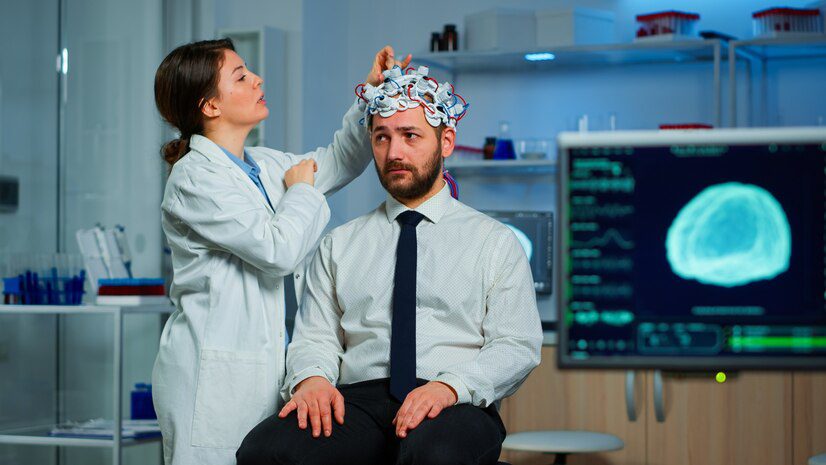
- EEG (Electroencephalogram) — Records electrical activity in the brain. The key test for epilepsy.
- EMG (Electromyography) — Tests how well nerves and muscles are working. Used for neuropathy and ALS.
- Nerve Conduction Study — Measures the speed of electrical signals through nerves.
Lab Tests
- Blood tests — Can reveal infections, vitamin deficiencies, and autoimmune markers.
- Lumbar Puncture (Spinal Tap) — Analyzes cerebrospinal fluid for signs of infection, MS, or cancer.
- Genetic Testing — For conditions like Huntington’s disease or hereditary neuropathies.
| Test | What It Looks For | Common Use |
|---|---|---|
| MRI Brain | Structural abnormalities | MS, stroke, tumors |
| EEG | Abnormal brain waves | Epilepsy |
| CT Head | Bleeding, bone fractures | Emergency head trauma |
| EMG/NCS | Nerve and muscle function | Neuropathy, ALS |
| Spinal Tap | CSF analysis | Meningitis, MS |
| PET Scan | Brain metabolism | Alzheimer’s, brain cancer |
Treatment Options for Neurological Diseases
Treatment depends completely on the specific disease, how far along it is, and the patient’s overall health. The good news is that options have expanded a lot over the last two decades. The doctorhub360.com neurological diseases treatment section reflects these advances clearly.
Medications
Medications are the first line of treatment for most neurological conditions. Here are some examples:
- Anti-seizure drugs (like levetiracetam, valproate) for epilepsy
- Dopamine-based drugs (like levodopa/carbidopa) for Parkinson’s
- Disease-modifying therapies (like interferon beta, natalizumab) for MS
- Cholinesterase inhibitors (like donepezil) to slow Alzheimer’s progression
- tPA (tissue plasminogen activator) given within hours of an ischemic stroke to dissolve clots
- CGRP inhibitors for migraine prevention — a newer class of drugs that’s been a game-changer
Surgery
Surgery is needed for some neurological conditions. A few examples:
- Deep Brain Stimulation (DBS) — Electrodes implanted in the brain help control movement in Parkinson’s and tremors.
- Epilepsy surgery — Removing the area of brain causing seizures when medications fail.
- Aneurysm clipping or coiling — To prevent or repair a ruptured brain aneurysm.
- Spinal cord surgery — For disc herniation, stenosis, or tumors pressing on the spinal cord.
Rehabilitation Therapies
Many neurological patients need ongoing therapy to regain or maintain function. This is a huge part of treatment that’s often underestimated. As covered in detail on our blog at The Daily Focus, rehabilitation can genuinely transform quality of life for neurological patients.
- Physical therapy — Rebuilds strength, balance, and coordination after stroke or injury
- Occupational therapy — Helps people relearn everyday tasks
- Speech therapy — For patients with swallowing or communication problems
- Cognitive rehabilitation — Structured exercises to improve memory and thinking after brain injury or stroke
How to Protect Your Brain: Lifestyle Tips That Actually Work
Prevention is not just possible — it’s powerful. Many neurological diseases have risk factors we can actually control. The doctorhub360.com neurological diseases wellness section emphasizes this strongly, and the science backs it up.
Sleep Well
Sleep is when the brain clears out toxic waste products — including the amyloid plaques linked to Alzheimer’s. Chronic poor sleep raises the risk of cognitive decline, stroke, and depression. Adults should aim for 7–9 hours per night. Treat sleep apnea if you have it — it’s a significant risk factor for stroke and dementia.
Stay Physically Active
Exercise is one of the best things you can do for brain health. Regular aerobic exercise increases blood flow to the brain, promotes the growth of new neurons, and reduces inflammation. Even 30 minutes of brisk walking five days a week can make a real difference. For Parkinson’s patients specifically, exercise has been shown to slow disease progression.
Eat a Brain-Healthy Diet
The MIND diet (a combination of Mediterranean and DASH diets) has strong research support for reducing Alzheimer’s risk. Focus on:
- Leafy greens (spinach, kale) — at least 6 servings per week
- Berries — especially blueberries and strawberries
- Nuts and olive oil
- Fish — at least once per week
- Beans and whole grains
- Limiting red meat, butter, cheese, and fried food
Protect Your Head
Traumatic brain injury (TBI) is a major risk factor for dementia and neurological problems. Wear helmets when cycling or playing contact sports. Use seatbelts. Fall-proof your home if you’re caring for an elderly parent. These simple steps prevent a lot of damage.
Manage Vascular Risk Factors
High blood pressure, diabetes, high cholesterol, and smoking are all major risk factors for stroke and vascular dementia. Keeping these under control through medication, diet, and lifestyle changes directly reduces your neurological risk. This is one of the most actionable things you can do.
Neurological Diseases in Children
Neurological conditions don’t only affect older adults. Children can be affected too — sometimes from birth, sometimes developing over time. doctorhub360.com neurological diseases includes a dedicated section on pediatric neurology that many parents find invaluable.
Common Pediatric Neurological Conditions
- Cerebral Palsy — A group of disorders affecting movement and muscle tone, caused by brain damage before, during, or shortly after birth.
- Childhood Epilepsy — Many children with epilepsy outgrow it. Early treatment is important to protect developing brains.
- Autism Spectrum Disorder (ASD) — Affects communication, behavior, and social interaction. Involves abnormal brain development.
- ADHD — A neurodevelopmental disorder affecting attention and impulse control.
- Pediatric Brain Tumors — The most common solid tumor in children. Symptoms include headaches, vomiting, and vision or balance changes.
- Febrile Seizures — Seizures triggered by high fever in young children, usually harmless but frightening for parents.
The Connection Between Neurological and Mental Health Conditions
The line between neurological and psychiatric conditions is blurry. Depression, anxiety, and psychosis all involve changes in brain chemistry and structure. Many neurological diseases also cause mental health symptoms — and vice versa.
For example, up to 50% of Parkinson’s patients experience depression. People with epilepsy have higher rates of anxiety and depression. Alzheimer’s patients often develop behavioral changes that look like psychiatric disorders. This overlap means that neurologists and psychiatrists often need to work together.
Increasingly, conditions like OCD, schizophrenia, and bipolar disorder are being studied through the lens of neuroscience. This is changing how they’re treated — with more precision and less stigma. Resources like doctorhub360.com neurological diseases are helping patients and families understand these connections.
Exciting New Developments in Neurology
Neurology is one of the fastest-moving fields in medicine right now. Here are some of the most exciting recent developments.
Gene Therapy
For some genetic neurological diseases, gene therapy is now a reality. Zolgensma, approved for spinal muscular atrophy (SMA) in children, is one of the most successful gene therapies ever developed. It works by replacing the defective gene that causes SMA. Research is ongoing for Huntington’s disease, ALS, and certain forms of epilepsy.
Stem Cell Research
Stem cell therapy holds promise for conditions like Parkinson’s and MS. The idea is to replace damaged neurons with healthy ones grown from stem cells. We’re not there yet for most conditions, but the science is advancing rapidly.
Brain-Computer Interfaces (BCIs)
Companies like Neuralink are developing implantable devices that let patients with paralysis control computers or robotic arms using their thoughts. Early trials have produced remarkable results for people with ALS and spinal cord injury.
AI in Neurology
Artificial intelligence is being used to analyze brain scans, detect early Alzheimer’s changes years before symptoms appear, and predict stroke risk. AI is also helping match epilepsy patients to the right anti-seizure medications faster.
As The Daily Focus has reported, the integration of AI tools into neurological care is one of the biggest shifts happening in modern medicine right now.
Caring for Someone With a Neurological Disease
Being a caregiver for someone with a neurological condition is one of the hardest jobs there is. Conditions like Alzheimer’s, ALS, and stroke can take a huge toll on families. Here’s what caregivers need to know.
Practical Tips for Caregivers
- Learn as much as you can about the specific disease — knowledge reduces fear and helps you advocate for your loved one
- Build a care team — neurologist, primary care doctor, physical therapist, social worker
- Look into home modifications — grab bars, ramps, non-slip mats — to prevent falls
- Connect with a support group — other caregivers understand what you’re going through
- Take care of yourself too — caregiver burnout is real and common
- Explore respite care options to give yourself a break
- Review legal and financial planning — power of attorney, advance directives — early
Resources for US Caregivers
Organizations like the Alzheimer’s Association, the National MS Society, the Parkinson’s Foundation, and the American Brain Foundation all offer helplines, local chapters, and educational resources. Many also fund research and advocate for better policies. Using a resource like doctorhub360.com neurological diseases alongside these organizations can help you stay informed and connected.
Conclusion
Neurological diseases are complex, challenging, and deeply personal for the millions of Americans living with them. But understanding these conditions — how they develop, what symptoms to watch for, how they’re diagnosed and treated — puts you in a much stronger position.
Platforms like doctorhub360.com neurological diseases are making high-quality medical information available to everyone. Whether you’re a patient, a caregiver, a student, or just someone who wants to stay informed, these resources are genuinely valuable.
The most important things to remember: don’t ignore warning signs, get screened early if you’re at risk, and take care of your brain through lifestyle choices every single day. The brain is the most extraordinary organ in your body — it deserves your attention.
If you found this article helpful, check out more health guides at The Daily Focus for reliable, easy-to-understand health and wellness content.